Why Attic Insulation Matters in Renfrew County
In Renfrew County's cold climate, the attic is the single most important area of the home to insulate properly. Heat naturally rises, and in a poorly insulated attic, up to 25% of a home's heat loss escapes through the ceiling. With winter temperatures routinely dropping below -25°C in communities like Pembroke, Petawawa, Renfrew, and Deep River, inadequate attic insulation leads to extraordinarily high heating bills and uncomfortable living spaces.
The Ontario Building Code requires R-60 for attic insulation in Zone 6, which covers all of Renfrew County. This is significantly higher than the R-40 requirement in warmer parts of Ontario. To achieve R-60, you need approximately 22 to 24 inches of blown-in insulation — a depth that many older Renfrew County homes simply do not have.
Beyond energy savings, proper attic insulation prevents ice dams, reduces condensation risk in the attic, and extends the life of your roof. In Renfrew County's heavy snow climate, ice dams are a common and costly problem that can cause thousands of dollars in interior water damage.
Types of Attic Insulation
Blown-In Cellulose
Blown-in cellulose is the most popular attic insulation choice in Renfrew County for good reason. Made from recycled paper treated with fire retardants, cellulose offers an R-value of approximately R-3.5 to R-3.8 per inch. It settles slightly over time, so installers typically over-apply by about 10% to achieve the target R-value. Cellulose fills tightly around joists, trusses, wiring, and obstructions, creating a dense thermal blanket that also reduces air movement through the insulation layer.
One of the key advantages of cellulose in cold climates is its superior air-sealing performance compared to fibreglass. The dense packing of cellulose fibres significantly reduces convection within the insulation layer, which is a major source of heat loss in very cold conditions. Cellulose is also treated with borate-based fire retardants that are effective against pests and mould.
Blown-In Fibreglass
Blown-in fibreglass offers an R-value of approximately R-2.2 to R-2.5 per inch, meaning you need greater depth to achieve R-60 compared to cellulose. It is lighter than cellulose and does not settle as much, but it is also more prone to air convection within the insulation layer in extreme cold. Fibreglass is non-combustible and does not absorb moisture, which can be an advantage in attics with minor humidity issues.
Fibreglass Batts
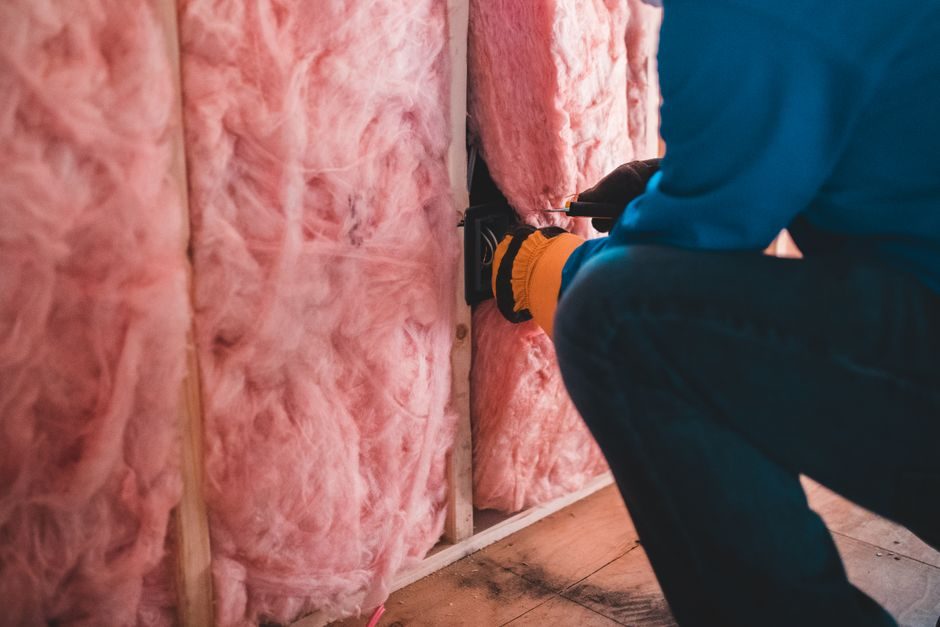
Fibreglass batts are pre-cut panels that fit between ceiling joists. They are commonly used in new construction and attics with standard joist spacing. Batts offer R-3.0 to R-3.3 per inch and are available in a range of thicknesses. However, achieving R-60 with batts typically requires two layers — one between joists and a second layer perpendicular over the joists — to reduce thermal bridging through the wood framing.
For DIY homeowners in Renfrew County, batts are the most accessible option. However, improper installation — such as gaps, compression, or leaving edges exposed — dramatically reduces their effective R-value. Batts must be carefully cut to fit around obstructions, which is time-consuming in attics with complex framing, wiring, and ductwork.
R-60 Requirements — Zone 6 Ontario
Achieving R-60 in a Renfrew County attic requires the following approximate depths for common insulation materials:
| Material | Depth to Reach R-60 | R-Value Per Inch |
|---|---|---|
| Blown-in cellulose | 16–18 inches (settled depth) | R-3.5 – R-3.8 |
| Blown-in fibreglass | 24–27 inches | R-2.2 – R-2.5 |
| Fibreglass batts | 20–22 inches (two layers) | R-3.0 – R-3.3 |
| Closed-cell spray foam | 8–10 inches | R-6 – R-7 |
Cost Comparison: Attic Insulation in Renfrew County
| Type | Cost per sqft to R-60 | Installation |
|---|---|---|
| Blown-in cellulose | $1.50 – $2.50 | Professional preferred; DIY with rental machine possible |
| Blown-in fibreglass | $1.50 – $2.50 | Professional preferred |
| Fibreglass batts | $1.00 – $2.00 | Easy DIY; lower labour cost |
| Closed-cell spray foam | $3.00 – $5.00 / board foot | Professional only; certified applicator required |
Note that these figures are for insulation material and installation only. Most attic insulation projects in Renfrew County also require air sealing preparation, which adds approximately $300 to $800 depending on the complexity of penetrations (recessed lights, plumbing stacks, wiring chases, attic hatches).
Ventilation Baffles — Critical for Renfrew County
In Renfrew County's heavy snow climate, proper attic ventilation is just as important as insulation. Ventilation baffles (also called rafter vents) maintain an air channel between the insulation and the roof deck, allowing cold outside air to flow from the soffit vents up to the ridge vent. This airflow keeps the roof deck cold, preventing ice dams in winter and reducing moisture buildup year-round.
When adding blown-in insulation, baffles must be installed at every rafter bay before the insulation is applied. Without baffles, insulation can block soffit vents entirely, eliminating attic ventilation and dramatically increasing the risk of ice dams and roof rot. Baffle installation is a standard part of any professional attic insulation job in Renfrew County.
Attic Ventilation Requirements
- Intake: Continuous soffit vents or individual soffit vents around the perimeter
- Exhaust: Ridge vent, gable vents, or roof vents (ridge vent is most effective)
- Ratio: 1 sqft of vent for every 300 sqft of attic floor (1:300) in Renfrew County
- Baffles: Required at every rafter bay where insulation meets the roof line
Air Sealing First — The Most Important Step
Before any insulation is installed in a Renfrew County attic, all air leaks between the living space and the attic must be sealed. Common leakage points in Renfrew County homes include:
- Recessed lights: Old non-IC-rated fixtures are major air leaks; replace with IC-rated sealed fixtures
- Plumbing stacks: Gaps around pipes where they pass through the ceiling
- Electrical wiring: Holes drilled for wiring in top plates
- Attic hatches: Unsealed hatches are massive air leaks; weatherstrip and insulate the hatch cover
- Bathroom fans: Ducted to the exterior? Many are not — and the fan housing itself leaks air
- Chimney and flue chases: Gaps around masonry or metal flues require fire-rated sealant
Air sealing is typically done with caulk, expanding foam, and weatherstripping. This work adds cost but is essential — air sealing alone can reduce heating costs by 10–20%, and without it, even R-60 attic insulation will underperform significantly.
Full Attic Job — What to Expect
A typical attic insulation project in a Renfrew County home involves the following steps:
- Inspection and assessment: Check existing insulation depth, identify leaks, assess ventilation
- Air sealing: Seal all penetrations with caulk and expanding foam
- Baffle installation: Install ventilation baffles at every rafter bay
- Insulation application: Blow cellulose or fibreglass to the target depth (or install batts)
- Attic hatch: Insulate and weatherstrip the attic access hatch or pull-down stairs
- Final inspection: Verify depth, check baffles, ensure vents are not blocked
For a typical 1,000-square-foot attic in Renfrew County, expect the full job to cost $1,500 to $4,000 depending on material choice, accessibility, and the extent of air sealing required.